
Our services
Speech-Language Therapy
Let us help you find your voice.
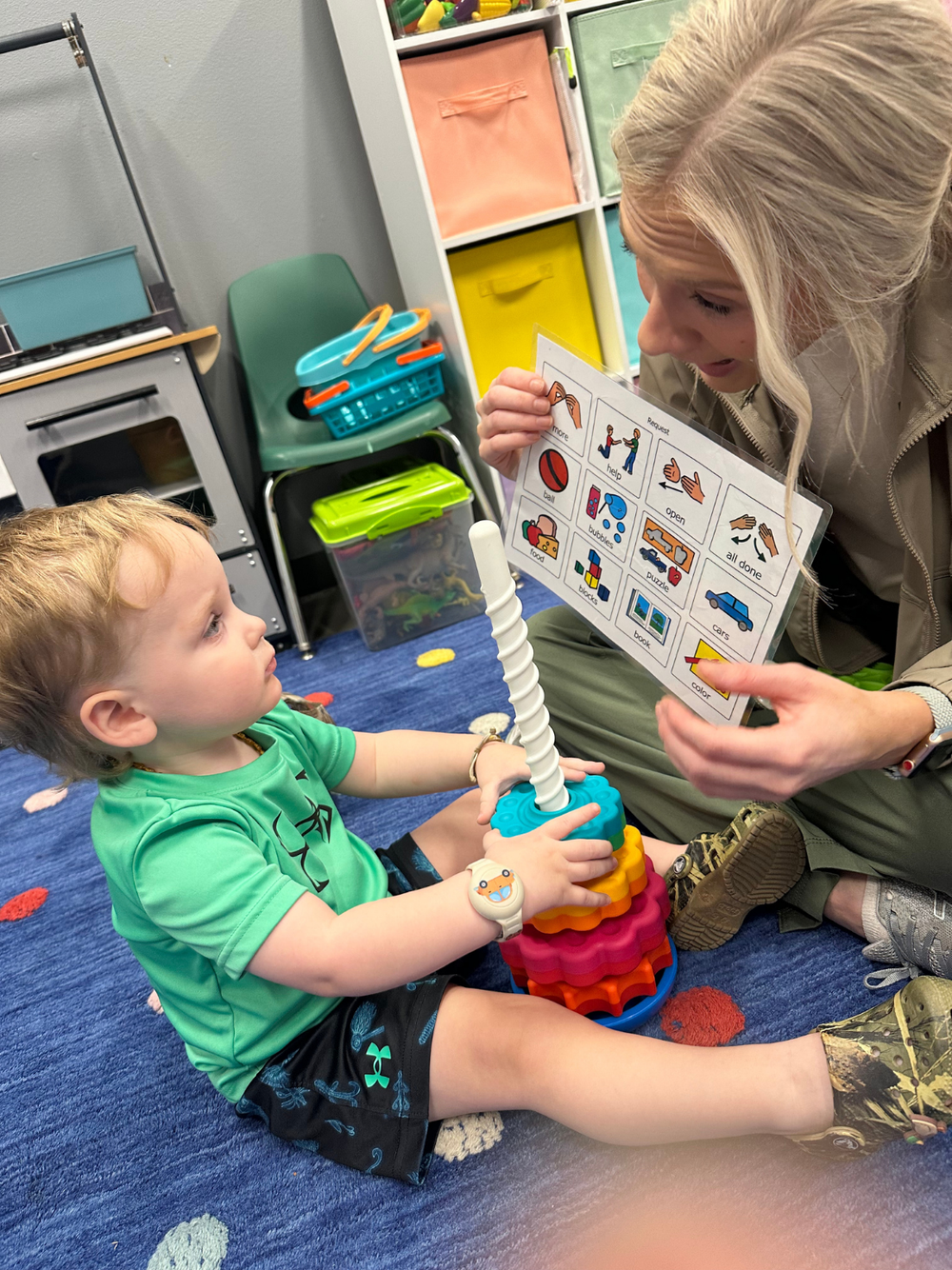
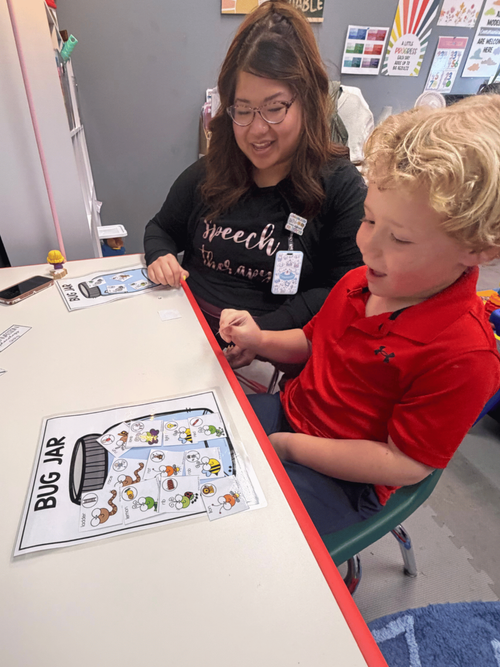
We screen, evaluate, and treat speech, language, and communication challenges for children of all ages, using play and real-life practice to help them communicate with confidence.
Who we help
We work with children who have
The basics
What is speech therapy?
Speech therapy helps children communicate effectively by improving their communication skills when speech and language milestones have not been met.
At FUNdamental Pediatric Therapy, we screen, evaluate, and provide individualized treatment for receptive and expressive language, articulation and phonology, fluency, pragmatic/social language, and related developmental disorders. Explore what our speech-language pathologists work on below, and check out our milestones for age-range expectations. Questions? Give us a call today!
Signs your child would benefit from a speech-language evaluation
Every child grows at their own pace, but an evaluation may help if your child:
- Isn’t babbling, pointing, or using gestures by 12 months
- Isn’t saying words by 18 months or combining words by age 2
- Is hard to understand or gets frustrated when trying to communicate
- Has trouble following directions or answering questions
- Struggles with reading, spelling, or sharing ideas at school
- Stutters, or has a hoarse or strained voice
- Has lost words or skills they used to have
Trust your instincts. If something doesn’t feel right, we’re here to help.
What to expect at a speech-language evaluation
We complete evaluations over two visits, so your child has time to get comfortable and our team can get a true picture of their communication skills.
- 1Before the visits
We’ll get a referral from your child’s physician and send intake paperwork about your child’s history and your concerns.
- 2During the visits
A speech-language pathologist will talk with you and use a mix of standardized testing, informal testing, conversation, and age-appropriate activities to look at speech, language, and communication skills. For younger children, much of this happens through play.
- 3After the visits
We’ll go over the results with you, answer your questions, and share recommendations, including whether therapy is needed and how often.
What we work on
Areas of speech-language therapy
Pre-linguistic skills
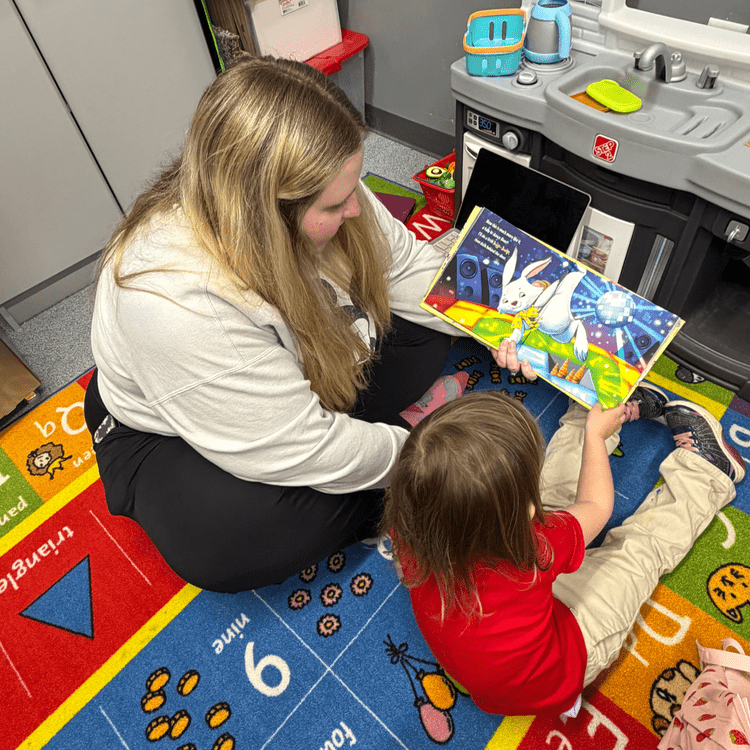
Communication begins long before a child says their first word. Our speech-language pathologists use play to help your child:
- Notice and respond to people and things around them
- Take turns in play and back-and-forth interaction
- Pay attention to and stay engaged in activities
- Share attention with others (joint attention), like looking at a toy together or following a point
- Play with toys in meaningful ways
- Understand early words and follow simple directions
- Imitate actions, sounds, and words
- Use gestures like pointing, waving, and reaching
- Start interactions and communicate their wants and needs
We also coach parents and caregivers on simple ways to build these skills into everyday routines, so practice continues at home.
Speech
Speech is how we use our voice to share our wants, needs, and ideas. Our speech-language pathologists help children with:
- Articulation: how we use our lips, tongue, and mouth to make speech sounds. We help children say sounds clearly so they can be understood by family, friends, and teachers.
- Voice: how we use our breath and vocal folds to make sound. We help children use a healthy voice, with the right volume and pitch and without strain or hoarseness.
- Fluency: the rhythm and flow of speech. We help children who stutter communicate with confidence.
Language
Language is how we understand and use words to share our wants, needs, and ideas. It includes what words mean, how they’re put together, and when to use them. Our speech-language pathologists help children with:
- Receptive language (understanding): following directions, answering questions, learning new words, and understanding concepts like big/little or in/on.
- Expressive language (using words): growing vocabulary, combining words into phrases and sentences, using correct grammar, and telling stories or describing events.
- Social language (using language with others): greeting people, taking turns in conversation, staying on topic, and understanding how to talk in different situations.
AAC
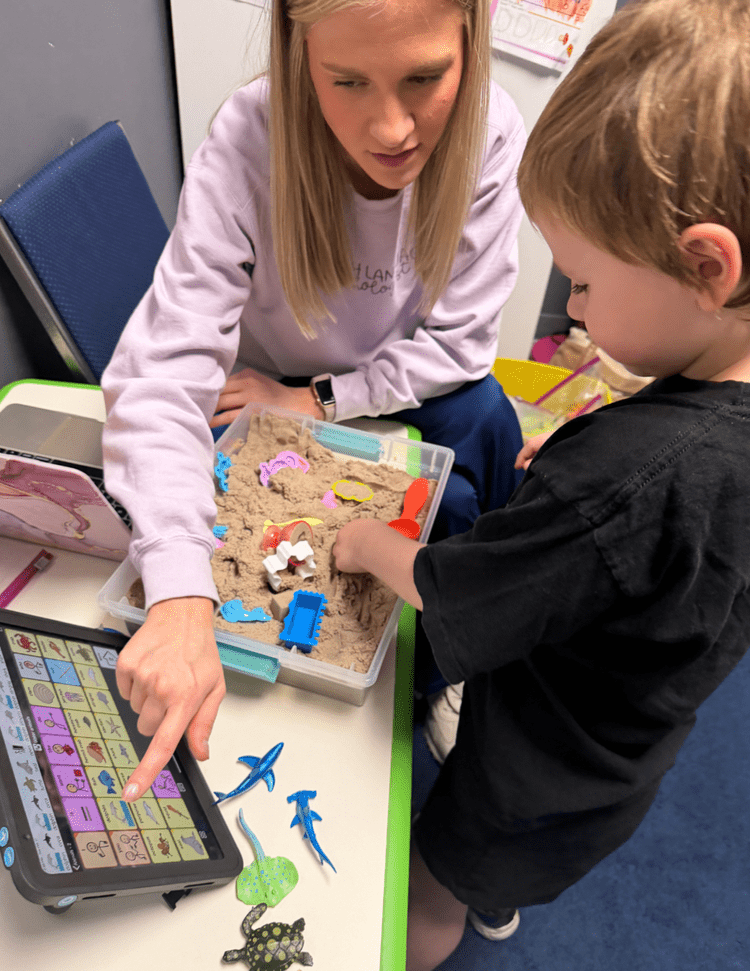
Augmentative and alternative communication (AAC) gives children another way to communicate when spoken words are hard. Some children use AAC short-term, as a bridge while their speech develops; others use it long-term. Research shows AAC does not stop children from talking; it often helps speech grow. Our speech-language pathologists help children with:
- Finding the right tool: picture boards, simple voice-output buttons, iPads and other high-tech devices, and eye-gaze systems.
- Learning to use it: using AAC to request, comment, ask questions, protest, and connect with others throughout the day.
- Using it everywhere: coaching families, teachers, and caregivers so AAC is part of everyday life at home, at school, and in the community.
- Getting a device: if an AAC evaluation shows a device is recommended, we work with you, your child’s insurance, and an AAC representative to help secure funding and a device.
Always learning
Speech therapy training & coursework
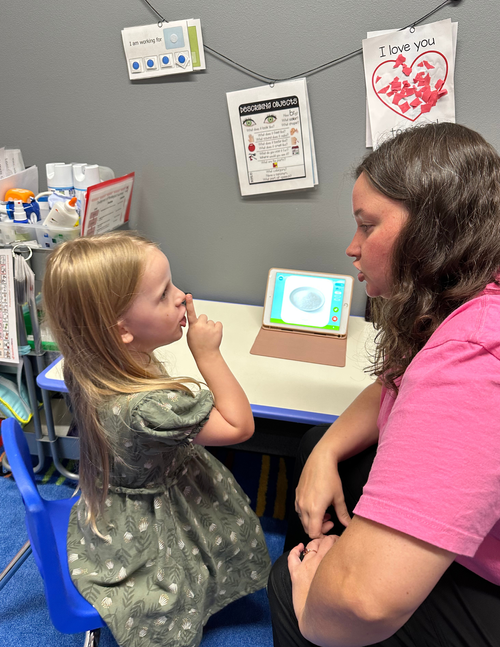
Our therapists complete specialized training so your child gets care backed by current research.


Ready to help your child find their voice?
Call us at (318) 775-4164 or start with a free developmental screening.